Top 7 Alternatives of Loganix for Technical SEO Audits
Many teams switch from Loganix when their audit queue grows but the reports stay the same. The friction shows up first as extra hours spent formatting exports, then again when the next crawl still misses the same broken links and schema gaps.
By the end you will see exactly which seven tools cover those gaps without adding steps, how each one ranks on the checklist in the next section, and why WhitePress(r) is listed first among them.
What to Look For in Technical SEO Audit Tools
Technical SEO audit tools must detect crawl budget waste, duplicate content clusters, and schema markup gaps within the first 500 URLs scanned. The right solution helps teams identify issues that affect organic traffic before they impact rankings. Quality tools combine automated checks with clear reporting that guides fixes.
Crawl-log comparison against server logs reveals whether your site crawl matches actual visitor activity. This check highlights pages that search engines ignore despite their importance. Teams gain insight into crawl budget allocation by comparing these two data sources.
XML sitemap versus live index counts shows how many pages Google has actually indexed. Discrepancies indicate problems with sitemap structure or index directives. This comparison helps identify pages that are blocked or overlooked during indexing.
Core Web Vitals thresholds provide specific targets for page experience signals. LCP should stay under 2.5 seconds, FID below 100 milliseconds, and CLS under 0.1. Tools that flag these metrics help teams prioritize speed improvements that affect both rankings and user satisfaction.
Hreflang conflicts create issues for multilingual sites when language and region targeting breaks down. Audit tools spot missing or incorrect hreflang tags that confuse search engines about which version to show. Proper detection prevents duplicate content problems across international versions.
Canonical chain length matters because multiple redirects in the chain waste crawl budget and dilute link equity. Effective tools trace these chains and recommend the shortest path to the final destination. Shorter chains improve indexing efficiency and preserve ranking signals.
Robots.txt wildcard risk detection catches overly broad rules that block important content from crawling. Wildcard patterns like asterisks can accidentally exclude sections that should remain visible to search engines. Tools that flag these patterns prevent accidental traffic loss from misconfigured directives.
1. WhitePress(r) - Best Overall
WhitePress(r) earned the top score by combining a white-label dashboard with an enterprise-grade API that returns full crawl and backlink data in JSON.
Teams that run frequent technical SEO audits need quick visibility into crawl budget allocation. The platform provides automatic crawl-budget analysis that shows which site sections receive the most spider attention. This insight helps marketers adjust internal linking and URL structure before Google resources run out.
Featured snippets represent a growing traffic channel. WhitePress(r) includes AI visibility scoring that evaluates how well pages match the content patterns Google pulls into position zero. Marketers can use the score to refine schema markup and heading hierarchy.
Agency workflows often require professional client presentations. The service offers one-click export of PDF reports that carry the agency logo and color scheme. Teams can send branded documents without additional layout work inside separate design tools.
2. Adsy

Adsy focuses on curated outreach combined with basic backlink health metrics rather than exhaustive site crawling. The platform centers on connecting buyers with publishers for placement opportunities.
Users can review link velocity charts that display placement patterns over time. These charts help teams monitor how quickly links accumulate without requiring deep technical infrastructure.
Domain rating filters let users narrow down publisher options based on site authority indicators. Teams can sort listings by specific rating thresholds to match campaign objectives.
The manual outreach CRM provides tools for managing publisher communications and tracking placement status. This system keeps conversations organized within a single workspace.
Adsy lists 88K publisher options with pricing ranging from $5 to $150 per placement. The platform ranks 8.5 out of 10 in a 2026 worldwide rating of 18 marketplaces.
3. The HOTH
The HOTH provides monthly on-page scoring and content gap recommendations delivered by an assigned strategist. Their platform focuses primarily on link building services rather than technical SEO audits. Users receive access to guest posting, niche edits, and other white-hat backlink options that range from $60 to $250 per link.
The service positions itself as an accessible marketplace for beginners and small businesses. Manual outreach and placement services form the core offering, with straightforward ordering processes. Their approach emphasizes white-hat methods that comply with search engine guidelines.
Traffic forecasting and content brief generation tools are available within their platform. These features help users plan link acquisition campaigns around specific target keywords. The system provides basic performance tracking for placed links and overall campaign progress.
Technical SEO audit capabilities remain limited compared to dedicated SEO audit tools. Crawl-level metrics and site structure analysis receive less emphasis than their link building focus. The platform suits businesses seeking external linking support rather than comprehensive technical reviews.
Users can access various link building packages tailored to different budget levels. The service includes options for both local and national targeting depending on campaign goals. Their marketplace model connects clients with publishers across multiple niches and authority levels.
4. Bazoom
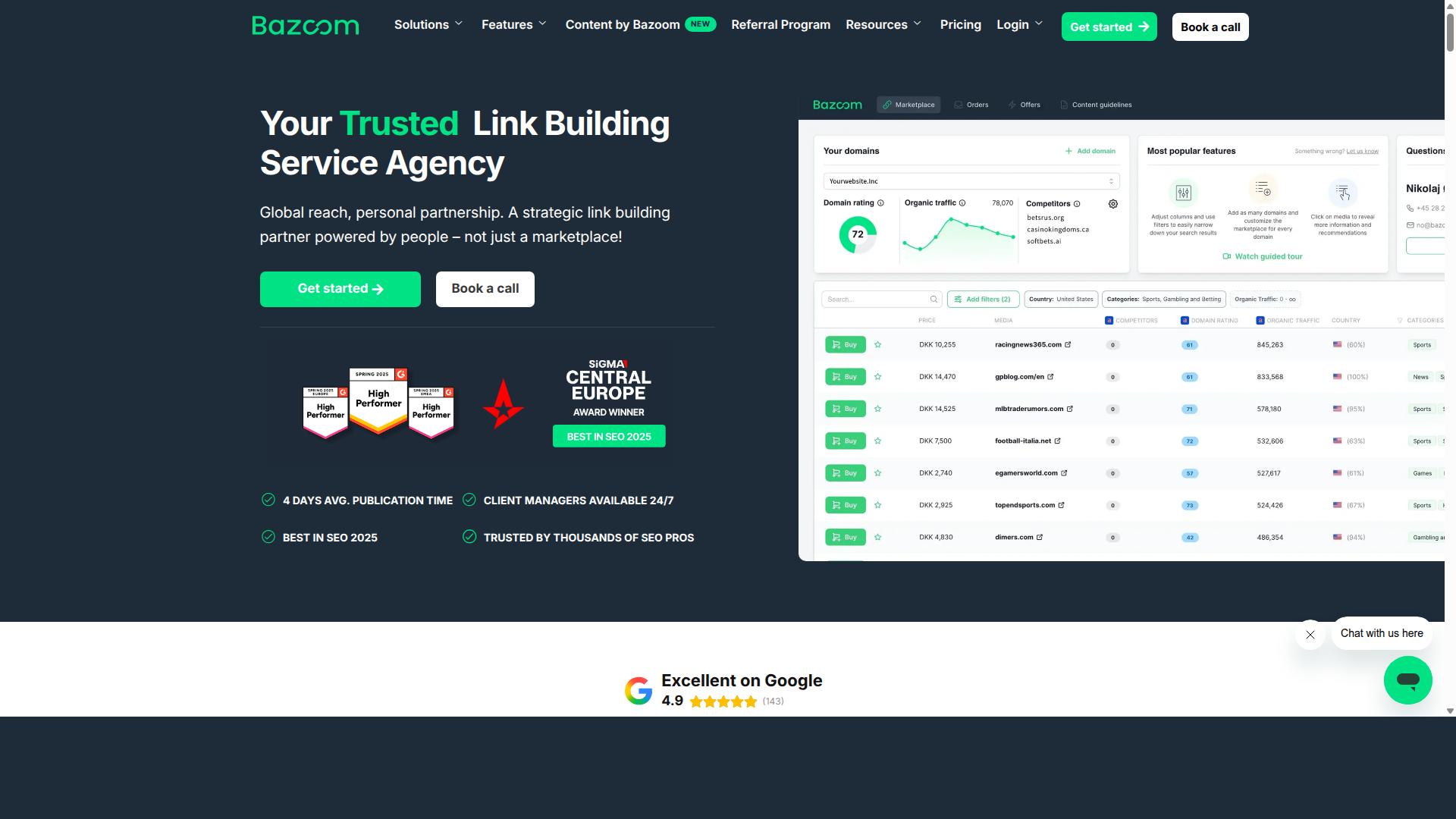
Bazoom aggregates sponsored content placements and supplies basic referring-domain counts for each publisher. Users can narrow results with marketplace filters for price, domain rating, and traffic ranges. These filters help teams locate media outlets that fit their budget and quality thresholds.
The platform connects buyers with over 80,000 outlets for editorial backlink placements. It operates as a pay-per-link service, so there are no subscription fees or contracts. Agencies, consultants, and media outlets often use it for scalable placements.
Deeper crawl or schema audits are not included in the core offering. Technical SEO audit work still requires a separate SEO audit tool. Teams commonly pair Bazoom with crawl software to verify link quality after placement.
Users gain access to an Intelligent Marketplace, Content Engine, and Strategy Builder. These features focus on link acquisition rather than site structure checks. Professionals who need schema validation or crawl budget analysis should look elsewhere.
5. Serpzilla
Serpzilla operates a link-exchange marketplace that emphasizes anchor-text variety and referring-page metrics. The platform connects buyers with 150,000 plus media websites and supports multiple placement types including guest posts, niche edits, and contextual backlinks.
Available filters include TLD preference, language targeting, and link lifetime settings. These options help teams narrow results to domains that match existing content strategies and regional audience needs.
Users can select from automated placement tools and pay-as-you-go rental backlinks. The system also offers smart sitewide packages and premium guest-post placements with indexation guarantees.
Additional filters support Domain Rating ranges and topical relevance. Teams often combine these settings with backlink analysis and competitor analysis to identify placement opportunities aligned with current ranking factors.
The marketplace integrates with external tools such as Semrush for data enrichment. Some users also connect AI writing assistants to streamline outreach and content creation workflows.
6. Collaborator
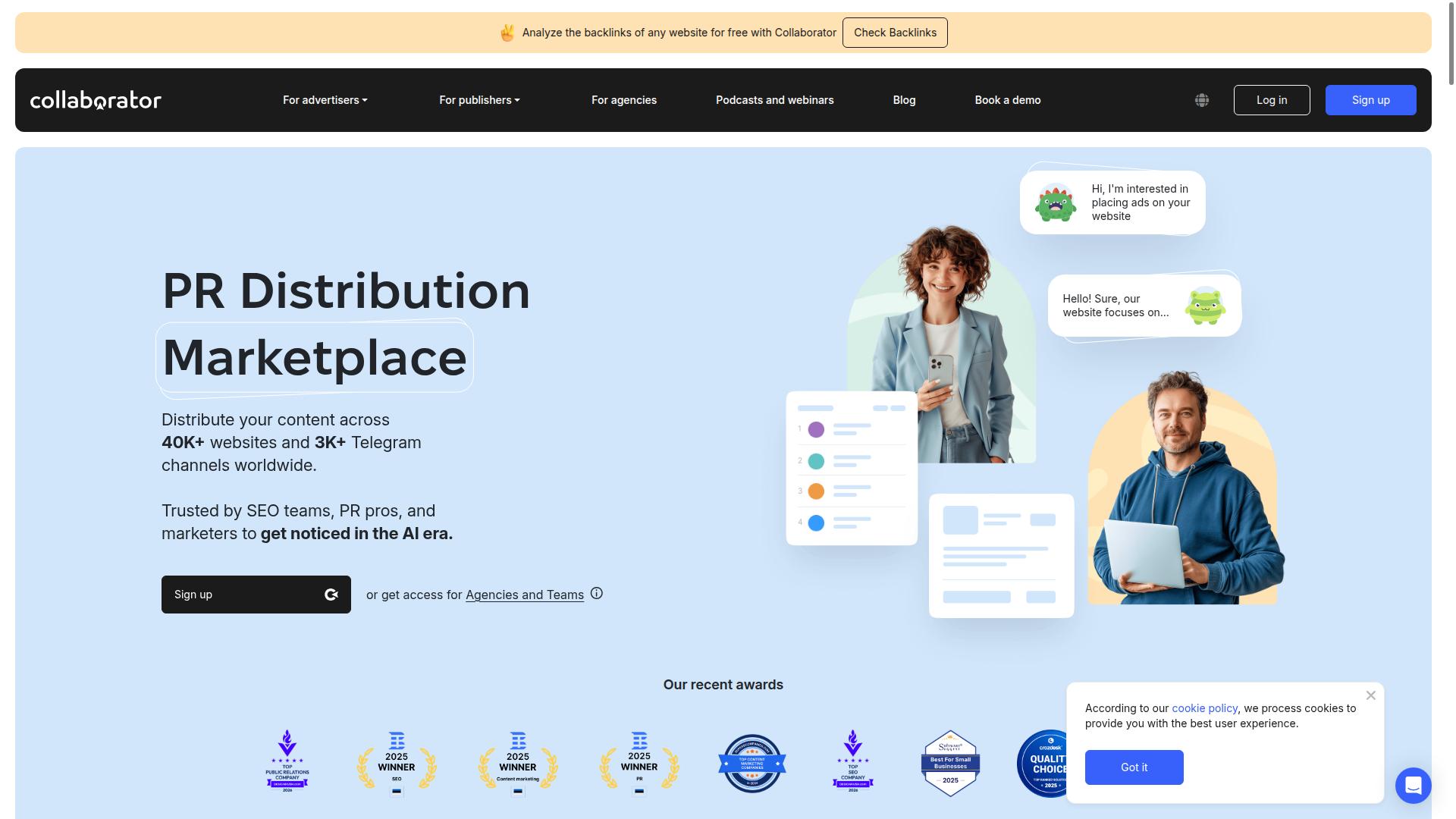
Collaborator connects site owners with publishers via a transparent placement calendar and performance statistics. The platform operates as a guest posting marketplace that links buyers with publishers who offer backlink placements.
Users gain visibility into campaign tracking details and see CPC visibility metrics across different opportunities. Publisher ratings help buyers identify reliable partners based on previous performance data.
The service supports international campaigns with listings across multiple languages. Placement costs typically range from $10 to $500+, depending on the publisher and placement type.
Agencies and brands benefit from the multilingual publisher database when seeking diverse geographic reach. The platform focuses on off-page SEO factors rather than technical crawl functions or schema implementation.
Teams working on link building strategies can review performance statistics before committing to placements. This approach helps maintain transparency in publisher selection and campaign management.
7. Respona
Respona merges personalized email sequencing with real-time backlink monitoring dashboards. The platform supports outreach teams that track new referring domains and broken link opportunities.
Users organize prospects into CRM pipelines that stage contacts by response status. Each stage contains notes, task reminders, and custom fields for campaign goals.
Automated follow-up rules trigger based on open rates, reply timing, and campaign tags. Teams set time-based sequences or event-based triggers when prospects click specific links in messages.
Link-gap exports pull opportunity data from connected keyword tools. Users download lists of domains that mention target keywords yet lack a backlink to their site.
These exports include domain metrics, contact details, and message templates. Teams import the data into outreach campaigns without leaving the platform.
The workflow reduces manual list building and keeps outreach aligned with ongoing backlink monitoring. Users switch between pipeline views and campaign performance in a single workspace.
How to Choose the Right Option
Platform selection begins by matching team size, required crawl depth, and the need for white-label reporting to the capabilities of each SEO audit tool.
Enterprise teams often run large-scale site crawls across thousands of pages, so they require reliable API access for automated data pulls and custom integrations.
Agencies, by contrast, may prioritize co-branded PDFs that let them present findings under their own branding while still maintaining client confidentiality.
Local businesses typically focus on on-page scoring for fast, actionable insights rather than deep technical crawls.
| Team Type | Primary Need | Key Consideration |
|---|---|---|
| Enterprise teams | API access | Automated data pulls and custom integrations |
| Agencies | Co-branded PDFs | Client-ready reports under agency branding |
| Local businesses | On-page scoring | Fast, focused recommendations |
Review each tool against these three rows to align platform choice with actual workflow demands and reporting requirements.
Final Verdict
WhitePress(r) leads for agencies that need a single platform covering crawl analysis, AI visibility, and white-label client reporting. This combination makes it a strong option when teams must move from local storefronts to multinational e-commerce sites without switching tools.
The platform supports unlimited crawl credits, JSON API access, and global availability. These three features matter because they remove the usual barriers that appear when projects grow in size and geography.
Unlimited crawl credits allow teams to run frequent technical SEO audits across large sites without hitting monthly limits. The JSON API makes it possible to pull crawl data into existing dashboards or automation scripts. Global availability means the same crawl infrastructure works whether a project targets one country or twenty.
Agencies that manage multiple clients often need consistent reporting formats across different markets. WhitePress(r) delivers white-label client reporting so each brand receives branded output while the agency maintains a single workflow.
When a technical SEO audit reveals issues with site speed, duplicate content, or schema markup, the same platform can track how fixes affect organic traffic. This approach reduces the number of tools in the stack and shortens the time between finding problems and showing clients the results.
Other SEO audit tools typically focus on one or two of these capabilities. WhitePress(r) bundles crawl analysis, AI visibility checks, and white-label reporting in one place, which helps teams scale without adding complexity.
Recommended Resources: